Day 4: Traveling with a toddler in Honduras: Copan

Share to Facebook Share to Twitter Email This Pin This

Day 4: Exploring Copan with a Toddler in Honduras

Today was our highly anticipated visit to the Copan Ruins, one of the largest centers of Mayan civilization over 1000 years ago. Renowned for its intricate sculptures, the site boasts more carvings than any other pre-Colombian city, featuring impressive depictions of ancient rulers, old residences, bathhouses, and an awe-inspiring hieroglyphic stairway. Although the entry fee of $15 per person seemed steep initially, we quickly agreed it was worth every penny.

As one of the most significant Mayan ruins, we were pleasantly surprised to find only a handful of other tourists, mostly Hondurans. This allowed us to explore the ruins with a sense of tranquility and personal connection. We wandered through partially intact residences, peered inside tombs, admired the detailed sculptures, and marveled at the grandeur of this ancient city.

The sheer scale of Copan is breathtaking. Just when you think you've seen the most remarkable part of the site, you climb another ancient staircase to discover an even more impressive area. After more than three hours of exploring, we still had an entire section left to see, nearly doubling what we had already covered. Unfortunately, the heat and exhaustion caught up with us, and we decided to save the rest for another visit.

Our toddler, Leila, was a trooper throughout most of the adventure. She did slow us down occasionally, captivated by the hundreds of vibrant macaws and her desire to climb each of the many stairs. A friendly Honduran family even asked to take pictures with Leila and their baby, which she enjoyed immensely. They were charmed by her blonde hair and blue eyes, though little did they know her sweet demeanor can sometimes be a facade.

Overall, Copan is one of the best historic sites we've ever visited and unquestionably one of the most extensive. We recommend dedicating a full two days to fully appreciate its beauty, especially given the heat. It's a 10/10 experience you don't want to miss!

The Ugly Face of Tourism

Share to Facebook Share to Twitter Email This Pin This

 A Journal Entry written while traveling in Peru 

 (Ollantaytambo, Peru)

It's so sad looking around me... the little old lady with her sidewalk stand selling little cheese sandwiches, mate, coffee, etc honestly for one sole. Smiling at passerby's. All around are numerous restaurants catering to tourists, large signs written in English, "American Breakfast". These restaurants selling the same little cheese sandwiches and coffee, yet on nicer plates and fancier chairs, for ten times the price. And the mindless tourists looking for the comfort of home. Those tourists who travel for the sites yet never look at the culture and beauty that lies right around those sites. Those who balk at the "uncleanliness" of local food. At the little lady that washes our coffee cups with her little bucket of hot water on the side of her little sidewalk stand instead of in a large commercial mass produced dishwasher. The tourists keep flocking in like sheep to their massive tourists restaurants eating and drinking for ten times the price, throwing their crisp bills at these money hungry tourist restaurants, surrounded by other gringos and closing their eyes to all that surrounds their closed little perfect world within mass tourism. All the while the little old lady catering kindly, honestly, and patiently to anyone that wants to stop and share a story or two or listen to a few tales while eating their cheese sandwiches and drinking hot coffee. Locals and tourists alike, treating all the same, complaining about the cold, scolding us like a sweet grandmother for not finishing the last drop of our "pachi" (hot mashed bean drink) because the last part has all the vitamins... honestly and kindly with her worn and torn shoes, constantly with a honest, sweet smile on her face.


Please share similar experiences below! 

Why you should travel with a baby

Share to Facebook Share to Twitter Email This Pin This

We have now taken Leila our 20-month-old to 11 countries traveling with us. She has been on 28 planes, couchsurfed, hitchhiked, countless trains, buses, taxis and motorcycles, played with children in villages, been passed around during traditional ceremonies, celebrated Ramadan, blessed by a Hindi holy man, and much more. She will not remember it so why take her?

 Before we had a child, everyone said, “just wait, once you have a baby you won’t be able to continue traveling like you do”, “kids are expensive”, “kids are difficult”. So other than just wanting to show people that yes, it is possible and yes you can enjoy it we also want to continue experiencing the world its sites, nature and people so why wouldn’t we bring her with us?


Here are just a few reasons to travel with a baby:

1) It does not cost more. Under 2s are almost always free. They do not cost that much extra especially if they are breast feeding. Transportation they are usually free or way cheaper, they do not have to pay entry fees or need an extra hotel bed and they really do not eat much,

International plane rides are almost free just pay taxes and fees and usually people will accommodate you to have an entire row! 


2) You are less likely to get ripped off. People love babies and toddlers and are more likely to help, give up their seat, etc. and very rarely going to charge you more.


3) You will make friends with locals. When you have a baby, people are curious. They want to say, “hi”. Having a child with you removes a barrier and automatically gives people a reason to come chat. If kids are around your child will automatically be drawn to them thus throwing you in with the locals. If you, like us, want to travel to understand the culture and life of locals this makes it so much easier.

Not only are babies free in transportation but you get lots of free babysitters (aka locals super excited to play with the baby)


4) You will see things differently. You do things you would not normally do- stop at playgrounds, stop so a local can tickle your baby, stop at zoos. You see things through their eyes and your joy also comes from seeing their joy.


5) You will take it slow. With a baby you slow down, look at the little cat or flower, stop for naps, etc. You will also get more time to enjoy your little one.


If you want to travel with you kid(s) do not let the naysayers convince you otherwise. It is possible and it is worth it!


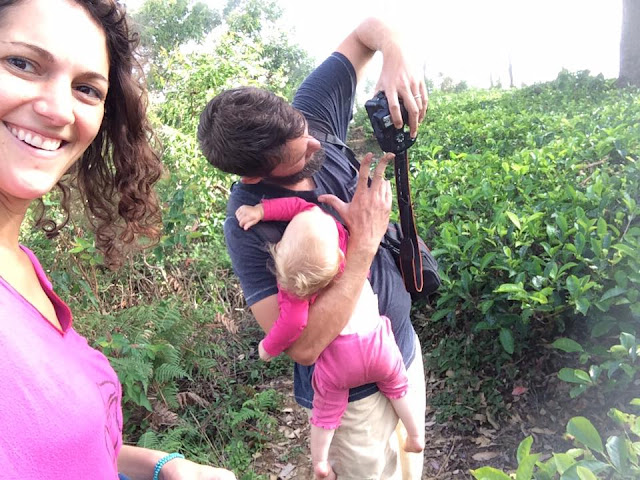
Only negative part of traveling with a baby: It's harder to take pictures and hold a baby
Only negative part of traveling with a baby: It's more difficult to take pictures while holding a baby


Somoto, Nicaragua (With a baby)

Share to Facebook Share to Twitter Email This Pin This

We had not planned to stop here at all but after hating Esteli plus all the hotels being full we had to find some place not too far away. At the end we were super glad that the misfortune of Esteli gave us the fortune that was Somoto.

Somoto is most famous for the nearby Somoto Canyon which was discovered I believe by Czech and Nicaraguan scientists and has only recently become a visited sight. We originally decided not to come here thinking it would be heard to reach, expensive and not possible to visit with a baby, but boy were we wrong. Not only did it take less than 1.5 hours to arrive from Esteli but we were able to visit the canyon with a baby too!


We loved Somoto from the moment we arrived. It was small, cute, and friendly. Plus, we only saw a handful of other tourists the whole time. There was a small local place that was always packed that made specialty. 

Beer on the balcony

Where to stay: We literally checked out EVERY hotel in town (to husband's chagrin, and wife's usual on a mission to find the cheapest and the best). As often happens we settled on the first hotel we visited (after visiting 20 more haha and returning to the first). Take a left out of the bus station and it is directly on the left. It was 400 cordobas per night that we negotiated down to 700 cordobas for two nights in a country extra hard and not so the norm to negotiate this made bargainer wife happy and merited a short eye roll from annoyed after walking 10 km to find a hotel only to return to the original one husband. In Nicaragua we learned most hotels would rather lose $15 per night instead of $2 by a simple negotiation. Anyway, the room we ended up with was HUGE with a private bathroom and even a nice sitting are on the second floor. It was brand new.


We did some early research on this website and found out that the easy tour with a 6 km walk would be possible for us. When we did the tour not only was it beautiful, not only was it only a 6 km walk which is better with the baby but our guide used blow up rafts that are provided and literally pulled us through the water and we just walked the difficult parts so that we were actually floating through the canyon. I think it was $30 or $40 for the two of us but it was definitely, definitely worth it, amazing and awesome to do for kids or with babies! Leila loved it too.


Verdict: Don't miss Somoto and bring the little ones there. Read about Nicaragua with kids here.

Have you been to Nicaragua? What was your favorite place? We hope to go back again soon so would love any new places we may have missed! :)

Traveling During Covid-19

Share to Facebook Share to Twitter Email This Pin This

 Empty airports, face masks, and social distancing

Very few people are traveling now. There’s a world-wide pandemic of a fast spreading corona virus. But greater than the virus itself is the new world-wide fear. Thanks to an unlimited access to media including TV, social media, etc the fear has spread everywhere, as if the actual fear was the virus itself.

Our arrival to Atlanta Hartsfield International Airport we were in shock at how empty the airport was compared to what we expected. There were no lines and hardly a soul walking around. It was almost like we stepped into some dystopian film. Our flights were less empty though probably at 30% capacity. We first flew to Amsterdam an 8-hour flight approximately, an 8-hour layover there, and then a second approximately 9-hour flight to Dar Es Salaam. On our first flight things were a little lax. Masks were not really enforced, and food service was limited but we got two hot meals and snacks. No alcohol unfortunately. On our second flight we were given a bag of awful sugary snacks and Diet Coke and masks were enforced.

At Atlanta Airport, most people and employees wore masks, though not everyone did. In Amsterdam on the other hand, all passengers wore masks, and signs everywhere told us to wear masks, but almost zero employees wore masks which was odd to us. Luckily, in our lounge where we spent our 8 hours most people didn’t wear masks and we felt comfortable. We get to have unlimited lounge passes thanks to my Chase Sapphire Reserve Card’s Priority Pass, which I fortunately learned about when we spend $200 for a 24 hour lounge pass when we came a day early for our flight one day accidentally and a guy gave us information on a whole new world especially for people who fly super often with cheapo tickets and many long layovers. So, I realize our view isn’t the same as everyone’s when it comes to mask freedom. We respect the rules and wear our masks when required and if masks aren’t required AND most people aren’t wearing a mask we won’t.

Once we arrived in Tanzania the Covid-19 requirements were so strange and almost felt like a show. Enforced 1.5 meter social distancing, employees checking that everyone had their masks securely, mandatory usage of hand sanitizer, and temperature checking. The show part was that there were a large handful of maybe employees filming and taking pictures of this. Totally seemed like a photo op to show how well Tanzania is responding to the Corona Virus. But as soon as we passed the doors to the arrival hall we did not see a single mask! 

Tanzania is one of the few, maybe the only country that never closed its borders, businesses, or prevent tourists from entering. In banks and public institutions masks are suggested and there’s a temperature check at the front door and hand sanitizing station but other than the occasional person you will not see anyone with aa mask or social distancing or distancing at all haha. So as each month brought our dreams of an annual summer backpacking adventure to an end, some vigorous research later we found a super cheap flight to a country we always hoped to visit and one that would allow us to do so during a time when so few feel safe to venture past their front door.


11 reasons to travel Ethiopia

Share to Facebook Share to Twitter Email This Pin This


Ethiopia is on one hand one of the best countries to travel and on the other hand at least for those who want to get off the beaten path one of the more difficult ones.

First why you would want to visit Ethiopia:

1)      It is SUPER cheap. 30-50 cents for a large beer even in the fancy places, 15-30 cents for the most amazing coffee prepared right in front of you, less than a dollar for an amazing meal, shared taxis across town less than 10 cents and hotel rooms for less than $10 and all of this without another tourist in sight.

2)      The food- not only is it super cheap but it is so amazing, varied and delicious. Forgot about the daily rice and beans of Central and South America the Ethiopian cuisine for the price is on par with our favorite foods of South East Asia and India. There is so much variety from vegetarians to meat lovers you can find something to excite your palate. Each meal you can try something different and never get bored. Also, we loved feeling like we were getting so much healthy nutrition with each meal as there was such a variety of vegetables and legumes. When you want meat it is taken off the goat, lamb or chicken in the entry of the restaurant (I guess to prove its freshness) and cooked directly in front of you or in some instances put in a stone bowl on the table with herbs and spices. 

3)      The coffee. I do not care where you've had coffee in the world, but you haven't experienced coffee until you've had true Ethiopian coffee. It is the best coffee in the world that we've tried from the famous Sumatran coffee, to the Honduran coffee, Vietnamese coffee, Lebanese, Turkish, Italian, nothing compares. The green coffee bean is roasted fresh each time they make a cup of coffee. It's roasted in a special pan until the beans become perfectly roasted with a coat of oil. They are then hand ground and then prepared with a special coffee urn and hot water. Oh and the macchiatos- the super strong coffee with a touch of milk are also perfection. And all this at a few pennies. Also, each time the traditional coffee is made incense is burned at the same time and popcorn popped fresh because popcorn and coffee honestly two of my favorite things why not enjoy them together? 

4)      Beer- Do you like beer? We LOVE beer. The beer here is not only mega cheap from 15 to 50 cents even in a fancy place but decent too and with a range of selection from their quite delicious lager to a nice dark beer. Also, people are always out drinking with their families, little ones, and friends so we enjoyed being able to go out for a beer feeling comfortable and not getting the “’Oh, you bad parents’ stink eye”. And unlike in many Asian countries the women drank as much as men often going out just women which was a bonus for me.


5) The fresh juice and smoothies! Fruits are plentiful here and for less than 50 cents you can get a huge glass of fresh juice. Papaya, mango, avocado and more! 


6)      Wherever we go as obvious foreigners there are people who try to rip us off, charge us a bit more and as super frugal backpackers our main goal is to avoid it at all costs. In Ethiopia NO ONE (except one random lady at a coffee stand who charged us 15 cents instead of 7 cents) tried to rip us off. Hotels, transportation, restaurants, shops event though we did not speak the language or look like a local we were always charged the same as locals and no one even assumed it would be otherwise. Now we visited the southern less touristy part of the country so we will have to return and explore the touristy north to see if the same holds true there.

7)      The history! Ethiopia has such a unique history with being the cradle of civilization, the connection between the Arab and African world, and having such a tolerance and mix of religions and peoples. This can all be seen and easily discovered while exploring this unique country.

8)      The people- friendly, lively, and interesting. We were never hassled or hustled. When we went out we were not given so much attention as in Asia. People pretty much ignored us or were just super friendly. We were left at peace in public places without the usual gawkers, not that we have a problem with that it was just a nice change especially when we were in places that obviously weren't used to tourists we were still treated equally. They are also so beautiful and unique in appearance with subtle but amazing differences between regions.


9)      Unique culture: As the only African country not colonized by European powers (minus a brief 5-year stint with Italy- thanks for the Macchiatos?) their culture remains their own. The languages, the writing, even the way of thought is more Ethiopian than influenced by the outside world.

10)      Safety- probably one of the safest country in Africa.

11)  Transportation- Cheap, easy, and effective.

Though for the most part Ethiopia is one of the best places to visit there are some things making it difficult, especially for budget travelers. As off the beaten track travelers there is not much to see or do without a guide or a lot of money and the tourist infrastructure just isn't there. Also, tourist sites are few and crazy expensive considering the prices of the county. As a side note, we didn't visit the more touristy north so there it may be a bit different.

We do highly recommend visiting Ethiopia and think no one would be diappointed!

A baby and a backpack: Nicaragua

Share to Facebook Share to Twitter Email This Pin This

TRIP 2:  A BABY AND A BACKPACK IN NICARAGUA


After a trip to France and Italy when Leila was 2-4 months old and continually being on the road for work in the states a backpacking trip to Nicaragua with the little one seemed like a piece of cake.


Best Product Brought: Lillebaby Airflow Complete

Since we were always on the move my favorite baby carrier (I have like 7) came in handy. It's mesh so very breathable. Extra comfy for baby and lots of padding for us. The mesh head cover is great for naps on the go or to protect from the sun and the front zippered pocket is a great place to stick money and phone.


Product we should have left at home: KidCo Peapod

Though we do love this quick popup tent since we were always moving we only used it once. It also took up half of our backpack space. This would be more useful for a beach trip where outdoor naps would be more common.


Product we wish we brought: Mountain Buggy Highchair

We ate out 2-3 meals per day. Restaurants don't have highchairs unless you go to fancy places so holding the squirt with one hand while trying to eat wasn't always easy. Luckily there were lots of friendly helping hands around but the seat would have made it easier.


Itinerary: Managua-Masaya-Ometepe-Leon-Matagalpa-Esteli-Somoto-Poneloya-Managua


Traveling with a baby in Nicaragua

As our first true backpacking experience with Leila, aka Leilita, Nicaragua is a super easy country to travel in general but even more so with a baby. Everyone REALLY loves babies here and everywhere we went she was quickly plucked out of our hands, passed around and played with. For parents carrying a baby around 24/7 this is a very welcomed respite. If on the other hand you find yourself to be prudish parents that freak every time someone glances at your child: stay home. In full buses someone always quickly gave up their seat for mom (or dad) and baby and every walk down a street every shopkeeper and passerby happily smiled at us and looked into the baby carrier exclaiming “que linda!”, “la preciosa”, and more endearing phrases.


Budget: For the16 days we had we planned a budget of $640 which was $40 per day or $20 per person per day. We ended up spending exactly $600 which was $18.75 per day. We did not couchsurf and as it was our first real backpacking trip with Leila we took it easy not really hitchhiking either and we definitely enjoyed our fair share of beers and activities. We could have easily spent less or more but this is an easy backpacking budget.


Sleeping: Lodging was way more expensive than we were used to in our previous Asia and South America trips at around 10-20$ (300-600 Cordobas) per night. This is with us searching the entire town to find the absolute cheapest place and negotiating on top of that. Without doing hardcore searching you can find hotels on the lower end at $15-$20 per night. The guesthouses we stayed at were usually run by a very friendly family or staff with a bathroom, fan and lots of windows.


Food: Though Nicaraguan food probably won't be winning any awards it's cheap, and satisfying. We loved finding markets where we could pick exactly what we wanted for about $1 for a vegetarian meal of fried eggs, beans, avocado, cheese and tortillas.


Verdict: Amazing place to travel with kids

A Baby and a Backpack in Masaya, Nicaragua

Share to Facebook Share to Twitter Email This Pin This

Masaya, along with Matagalpa, Somoto, and Poneloya one of our favorite cities in Nicaragua. There's a plethora of things to see and do nearby plus its super close to Managua yet very few tourists. Masaya has everything we love about a town: few tourists, lots to do, cheap, friendly people, and very lively.

Getting There: We arrived at Managua International Airport and crossed the street to the mainroad where after enquiring with a few locals we hopped on a bus written “Huembes” to go to Managua's main bus terminal which serves most southern destinations. Terminal Israel serves the northern locations and UCA has minibuses (around the same prices as the large buses) that go to Lyon, Granada, etc. The local bus from the airport to Huembes cost 2.5 cordobas. At the terminal we quickly found the bus for Masaya (final destination “RIVAS”) which cost 15 cordobas per person. Buses that don't end there or go to the terminal will drop you off on the highway really close to the city center.


Sleeping in Masaya: After hours of walking around enquiring at several hotels, hostales and hospedajes we found HOTEL CENTRALE which funny enough we had looked at before arriving on booking.com and airbnb.com. The super friendly young guy that runs the place and his sweet family immediately made us feel welcome and showed us a clean room with a window and private bathroom for $12 per night. We happily accepted and immediately washed off under a cold shower and laid down under the fan and took a nice long nap after the long journey of plane rides, sleeping in airports, bus rides and hotel searching.
The guy that runs the hotel has plenty of information on what to do in the area and speaks decent English. He will happily help with anything, let you boil water, use the fridge, etc. His mom loved Leila and we pretty much had a permanent babysitter there as she pulled out all her old baby stuff from the attic.

What to Do:
Laguna Apoyo (Crater Lake): 13 Cordobas on the bus from Masaya. Bus says “Laguna Apoyo” on it specifiy “la baja” as not all go to the bottom of the crater. There are two buses per day. One at 7:30am and one at 10:30 am and one back at 4:30 pm but ask to make certain while you're there.


After a long windy road with killer views down the crater the bus arrives at the bottom of the crater and the road forks where the bus will continue left. We got off there (there is also a cheap tienda there if you need snacks, drinks, etc) and walked to Apoyo Resort where I wanted to spend my birthday. There is no entry fee but guests must spend a minimum of 200 cordobas each. Beware they charge around 20% for taxes and tips on top of the high prices! Food is super expensive but beer isn't too high. We split a nacho appetizer which was enough food for two people and had a few beers. At Apoyo Resort there's a small pool and a nice beach area. It's not bad. The pool stunk of chlorine and I'm sure we could easily find a free beach by walking around but we wanted a nice place to relax. A nice bonus was this resort doesn't really cater to foreigners so we were the only foreigners there- all the better for us!
The other place we knew of was Monkey Hut where foreigners go to party- not our scene- there's a $7 entry fee which includes kayak usage for an hour and free coffee.
Our Kidco Peapod came in handy here and luckily they had a highchair.
Nachos plus 5 beers- 488 cordobas (a little less than $15). 

Our table at Apoyo
On our way back we ended up hitching a ride with three cool guys from Managua as we went to the bus stop at 3:30 and the bus doesn't come til 4:30 (we didn't ask ahead of time). It was a great experience meeting these three guys and it was Leila's first time hitchhiking plus we made it all the way back to our hotel in Masaya super quick and free. Happy Birthday to me :)
Verdict: Laguna de Apollo: Don't miss it.

China: Trip Summary

Share to Facebook Share to Twitter Email This Pin This
Our trip to China was interesting, eye opening, and we had a lot of wonderful experiences, but it was definitely one of our most difficult. Of course having a five month pregnant girl in tow makes it a little less comfortable, but their were many other factors. First of all it was winter, we decided to visit in January and February which definitely made it a little more difficult to travel and limited our options of where to go. Second of all, China is not as cheap as its neighboring countries and prices can be extreme for certain things. For example, you can easily get a nice meal for less than $2 but an entry to a site can cost over $30. Also train and bus travel are not cheap and as distances are long that needs to be budgeted in as well. Third, very few people almost none outside of very large cities in China speak English (or any other language), nor use or can understand roman letters. Plus, Chinese is very difficult to even try to learn making communication more difficult than normal.

Budget: $15 per day per person. What we spent (including a week in Hong Kong): $13/day/person.

A delicious hotpot in Xiamen
Food: Food was actually not as easy for us to find and definitely not as easy to order compared to South East Asia. We were usually couchsurfing and had dinner with our hosts and several hosts showed us around and we would order together which made it easier as they could translate. Plus with others we could taste many of the delicious traditional hotpots! When alone we would point and ask the price (in Chinese) and often succeed. As a side note, the more expensive restaurants ($3 and up per person) usually has menus with pictures. We usually ended up eating Baoxi which is a steamed bun filled with meat, vegetables, or sweet bean pastes never knowing what would be inside, but was almost always delicious, warm, and cheap at 2 yuan or less (30 cents). We often ate noodle soup at 7 yuan (1 dollar) or if we were lucky found these sort of food stands where you could choose some meat or veggie items with rice and soup for 10 yuan ($1.50). The food is not as good as nearby South East Asia, Korea, or Japan, but is not bad. We found the food to be quite oily and often bland. Of course the regions we visited and places we went surely had                                                                    an effect on the kind of food we ate.

Flight: We found a flight for $673 round trip per person from Atlanta to Shanghai on Air Canada.

Itinerary: We changed our plans and itinerary several times as we were traveling but here was our final route: Shanghai- Ningbo- Quanzhou- Xiamen- Guangzhou- Kunming- Kaiyuan- Yuanyang Rice Terraces- Mengzi- Tonghai- Kunming- Hongkong- Shanghai

Yuanyang Rice Terraces
Lodging: We exclusively couchsurfed minus

two occasions, the first being the Yuanyang Rice Terraces  (of which hopefully I will have a second article exclusively on this wonderful place) where we stayed at a guest house for 60 yuan ($10) per night for a room with a private bathroom. Secondly, as we had to stay one night in Shanghai after returning from Hong Kong we decided to just book a hotel by the airport which cost 139 yuan ($22) for a room with breakfast and a private bathroom.

With our couchsurfing host and her old classmates


People: The people we met were all a lot more friendly that I anticipated. Of course our couchsurfing hosts were amazing always going above and beyond to make us feel comfortable. People in the streets did not go out of their way to talk to us or smile at us but were always kind if we tried to ask a question or get directions. People were curious more than anything we were constantly stared at.


Square dancing: Square dancing happens in every large city and every tiny village. Locals (mostly older women) gather in a square and there is usually a teacher with a big sound system and they have synchronized dances. We finally joined in on one towards the end of our trip in Kunming with our couchsurifng host and her mom and it was one of the highlights of our trip for sure!

Charles Schwab, the Traveler's Dream Bank

Share to Facebook Share to Twitter Email This Pin This
Charles Schwab may just seem like another financial institution, but if you look a little closer you may be surprised at what they offer. First off, it's helpful to keep a separate bank account for traveling as you can see exactly what you are spending on your trip and keeps your travel funds organized. While traveling a few years ago, we met a couple who mentioned a bank in their country that with a minor fee per month they could withdraw an unlimited amount of money and be reimbursed for the fees incurred, which made us look for a similar option in a US bank. Then after some research we found Charles Schwab.


Why we love it:

It’s Free
There is no cost for setting up the account. No annual fees. No fees for transferring from one bank account to another.

Reimburse ATM Fees
It’s true. All ATM fees. Anywhere in the world! Seriously. For those of you who have traveled using a debit card you know those fees add up. Especially if you have a small budget. The fees can add up to around 10 percent per withdrawal. That can be around ten dollars or almost one whole day of travel per each $100 you withdraw. Charles Schwab charges you no fees at all and then the fees the other bank, or the ATM charges you, which you still have to pay are reimbursed by sweet Charles at the end of the month. What a guy! I’ve searched and searched and it seems that is one of the only banks that offers you that without any fees on top of it!

But that’s not all...

Pyay: A Special Place in Myanmar

Share to Facebook Share to Twitter Email This Pin This
Reading our article on Myanmar’s people, you can see how that can be one of the main draws in coming to Myanmar. Not to sit and gawk and take pictures of the people, but to befriend them and learn a type of honest generosity and friendliness that exists very rarely in the world, Pyay is one of those places where we went and though the sites we saw were unimpressive we left with one of the best experiences and the happiest of memories.

The story begins in Bago where Aurelien met an old university friend who ended up suggesting for us to go to Pangabar Guesthouse as they were friendly, cheap, and had the best breakfast possible. Pyay would make a convenient stop between Yangon and Mandalay (or Bagan) and of course we are always eager to discover places not really on the tourist map.

Leaving Bago we went to Yangon, spent two days and then went to the bus station to get our tickets for Pyay. Waiting for the bus we had a few hours to kill so we decided to hang out in the conveniently located Beer Garden to try our first Myanmar draught beer. Drinking our beer we ended up chatting with a super friendly local who ended up giving us his card as he turned out to be the manager of the guesthouse we were already planning to visit. As he handed us his card I pulled out the card that our friend had already given us and we had a few laughs and he bought us a round of beers and some snacks.

Myanmar: A Land of Spectacular People

Share to Facebook Share to Twitter Email This Pin This
When people recommend a place to visit it is usually based on its beauty, or sites, but Myanmar has other reasons for visiting. Myanmar is a country of vast natural beauty, and a plethora of temples and religious sites, but the main reason for visiting is the people.

Myanmar’s people have suffered a lot under a series of unjust governments and continues to do so today, but this seems to have only made the people friendly and happy though with unevenly spread wealth and little options in life. People in Myanmar are called Burmese. But the Burmese only refers to one of the several tribes that make up Myanmar so I refrain from using that term.

Myanmar’s people are very traditional even in the most modern of cities almost every man and woman will be wearing the traditional longgyi, which is similar to a long sarong. Different tribes or regions have different sarongs and people can be identified by their longgyi. In Myanmar everyone should try going to a local market and buying a longgyi with the help (ask for it) of surrounding locals as tying the longgyi takes a special technique.

Four women with their beautiful longgyis.

Fly on the Cheap: Low Cost Airlines

Share to Facebook Share to Twitter Email This Pin This
There are many websites and airlines that allow us to fly for a very low price within a region, country, or continent, of course our normal go-to website is Skyscanner (read our previous article), which compares many of those sites, but often by going directly to the airline’s site, better deals can be found. Here are our favorite discount airlines:

Asia

Air Asia (flies almost everywhere)

Tiger Air (mostly flights which pass through Singapore and thus a chance to experience the most awesome airport Changi - check our upcoming article)

Peach (mostly within and in or out of Japan)

Firefly (within and in or out of Malaysia)

Lion Air (within and in or out of Indonesia)

Indigo (within and in or out of India)

Europe

Easy Jet

Ryan Air (watch out for out of the way airports and hidden fees)

Couchsurfing: A "How To"

Share to Facebook Share to Twitter Email This Pin This

Couchsurfing is one of those things that will revolutionize the way you travel and even change your life and perspectives. When traveling, not being a tourist on vacation, but really traveling we often try to find out more about those places we pass through or linger in for awhile. We hope to find out more about the culture, history, sites, food, and most importantly people. We count on those small interactions at the market, getting invited to a beer or coffee with a friendly guy at a restaurant, playing with some children in the train, those small interactions make one’s experience. Couchsurfing, check out our article, gives us the chance to get a sort of full immersion in the culture even feeling a part of it, living, eating, and so much more as a local. If you have an open mind and hope to discover this side of a city, country, or culture then go ahead open up a new tab and set up your account.

If you don’t have a couchsurfing account, here’s how to set one up, and if you already have one, but have never used it you might want to check out this “How to” for some tips in guaranteeing you’ll get accepted when you write your next couch request!

Vietnam to Lao: The Road Less Taken (Na Meo)

Share to Facebook Share to Twitter Email This Pin This
It’s no secret that Southeast Asia is a backpacker’s favorite due to its numerous sites as well as affordable food, accommodation and transportation. One of the best things about traveling around Southeast Asia is that the most popular countries Vietnam, Laos, Cambodia, and Thailand can all be crossed by land quite easily for the most part. We decided to make our first of these crossings from Vietnam to Laos. After an epic month of couchsurfing, hitchhiking, teaching and a little too much drinking in Vietnam, Laos was calling our names from afar. That’s when started analyzing maps, and going through blogs to find out the best way to enter Laos, trying as usual to find the cheapest, and least traveled route.

At the end of our Vietnamese odyssey we were in Hanoi, the capital, which happens to be inconveniently located in regards to the available border crossings in to Laos. We thought our choices were limited to either taking a direct bus to Vientiane, the Laotian capital or taking a bus to Dien Bien Phu in the north, known for its importance during the war for independence, and also a frequented and prone to scams crossing. A bus to Dien Bien Phu costs a rough 300,000 dongs, approximately $15, our maximum daily budget, plus it is not even located on the border, that would have implied more money to spend on taking motorcycle taxis to the actual border and our other option, the direct bus to Vientiane would have changed our expected itinerary going from the center to the north and then back south again towards Cambodia, on top of costing $20. A little hopeless and with our visas ending soon, we noticed that another crossing closer to us existed, but how to get there. Very little information could be found online, but by chance we found this blog.

Onsens in Japan, or better known as Paradise

Share to Facebook Share to Twitter Email This Pin This
Onsens in Japan are what the Greeks must have imagined life to be like for the gods on Mount Olympus, paradise. Imagine a room full of jacuzzis some boiling, some medicinal, some ice cold, giant pools, steam rooms, relaxation rooms with comfortable longe chairs, soothing music, and refreshments. The Japanese consider this relaxation time an integral part of their culture and we see why. Of course that is once you get over the fact that your walking around and taking a bath with nothing but a towel on your head with several Japanese none who find this odd at all and have no concern to look at anyone else as they are more concerned with their own relaxation time.

Our first "rural" onsen in Hokkaido

What exactly is an onsen?

Onsens, or hotsprings, are an integral part of Japanese culture and as Japan is volcanically active they are usually found everywhere. The word “onsen” is usually used in reference to a bathing facility. Now there are many types of onsens: indoor, outdoor, public, private, big, small, in a commercial building, in a random hut in the country side, and even in hotels. Many of the “baths” contain herbs, sulfur, etc usually with a health benefit attached. Some are very simple with only three or four baths while some are luxurious with many baths, saunas, relaxation rooms, massages, and much more.

Video of the Week #4

Share to Facebook Share to Twitter Email This Pin This

While volunteering at a small primary school in rural Thailand we were lucky enough to live at the school along with a few other teachers. This is one of the teacher's daughter who is in Pre-k and would sing this song on a daily basis, mostly due to us prompting her as we thought it was possibly the cutest thing we have seen. Basically the song is about killing a chicken to grill it. 

Video of the Week #3

Share to Facebook Share to Twitter Email This Pin This
video of the week 3

The Video of the Week is back today and for the first time it features a music video. Mocca Garden, a Ska/Reggae band is on top of the Thai billboard with the song "I love Thailand". Fun, pop and refreshing, the song actually talks about "Falang", or westerners in Thai, and why they love to visit this country of South East Asia. The music video shows well-known areas of Bangkok and could be used by a tourism agency to promote Thailand. We don't know if the band is making fun of tourists but the song will stay stuck in your head for a while.

9 Months

Share to Facebook Share to Twitter Email This Pin This
We have now been traveling for nine months, or around 276 days. In that time we could have conceived and birthed a child, made a lot of money, or built a house, but instead we...

Ate silk worm larvae, partied, sang and dance with old Korean ladies, visited the super secretive North Korean border, were fed the delicacy raw crab by our host’s super eager to please mom at 7am, listened to the soft chants of the monks in countless temples and visited one of the world’s top amusement parks in Korea.

Trying Silk Worm Larvae in Pohang. 

Picture of the Week #4

Share to Facebook Share to Twitter Email This Pin This

Thanks to HelpX we spent an amazing, memorable month volunteering teaching English to primary school students in a not-on-googlemaps village. This village, Klong Bai Phat is around 30 minutes from Wang Nam Khiaw, not far from Nakhon Rathcasima in Northeast Thailand. These are some of the kindergarten children who love to run up to our door in the morning to yell out "Hello teacher!".